
This expanded, 1,000+ word blog post integrates SEO best practices, keyword density, scannable formatting, and rich visual elements tailored for World Wide Hair Hub.
No Itching, No Discomfort: How to Make Your Chemo Wig Wearable All Day
No Itching, No Discomfort – Chemo Wig Care Guide by World Wide Hair Hub
Undergoing chemotherapy is a journey that brings profound physical and emotional changes. For many people, hair loss is one of the most deeply personal aspects of that experience. While wearing a wig can help restore confidence, self-expression, and a comforting sense of normalcy, finding one that remains soothing throughout the entire day can feel like a challenge.
An itchy scalp, excessive sweating, tight cap pressure, and friction against sensitive skin can turn what should be an empowering accessory into a source of daily distraction.
The good news? You do not have to settle for discomfort. By understanding your scalp’s unique needs during cancer treatment, choosing the right cap construction, using soft accessories, and maintaining a gentle care routine, you can wear your wig with total confidence and ease.
At World Wide Hair Hub, we believe your wig should feel as light, comfortable, and natural as a second skin. Here is your comprehensive guide to transforming your chemo wig into an all-day, irritation-free crown.
1. Understand Why Your Chemo Wig Makes Your Scalp Itch
Before implementing solutions, it helps to understand why your scalp reacts differently while undergoing cancer treatments. Chemotherapy targets rapidly dividing cells, which affects hair follicles and temporarily transforms your skin’s natural barrier.
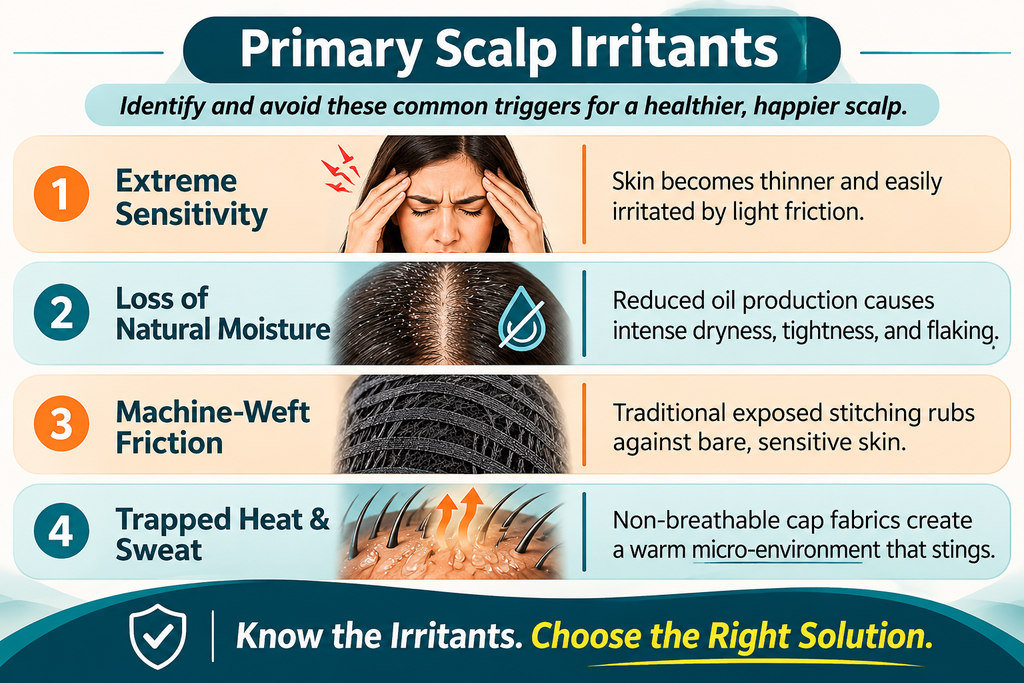
Recognizing these core triggers allows you to address the root causes of discomfort directly rather than simply enduring them.
2. Choose the Right Chemo Wig Cap Construction
The single most influential factor in wig comfort is how the interior cap is engineered. Standard wigs designed for fashion or high-volume styling often prioritize volume over interior softness. For sensitive scalps, look for specialized medical-grade constructions.
Monofilament Wigs
Monofilament (or “mono”) caps utilize a soft, semi-transparent mesh material at the crown or top. Individual hair strands are hand-tied into this micro-mesh, allowing your natural skin tone to show through for a realistic parting appearance. Because the interior is flat and smooth, it minimizes friction against a bare scalp.
100% Hand-Tied Wigs
Considered the gold standard for chemotherapy patients, 100% hand-tied wigs eliminate machine-sewn weft tracks entirely. Every individual hair strand is hand-knotted onto a soft, four-way stretch mesh cap. This results in an exceptionally lightweight, pliable wig that molds gently to your contours without bulky seams.
Silk Top & Lined Lace Front Wigs
Lace front wigs offer a realistic front hairline, while silk top designs place a smooth layer of silk between the hand-tied knots and your head. When selecting lace or silk styles, ensure the interior perimeter features soft edge bindings to prevent scratchiness along the forehead and nape.
3. Use Soft and Breathable Wig Accessories
You do not necessarily need to replace your current wig to achieve all-day comfort. Adding the right protective under-layer acts as a soothing buffer between your skin and the wig structure.
Why Upgrade to Bamboo Viscose?
Traditional nylon stocking caps trap sweat against the skin and can feel abrasive against a hair-free scalp. Bamboo viscose caps offer superior softness, absorb 3 to 4 times more moisture than standard cotton, and possess natural antibacterial properties to keep your scalp cool and fresh.
4. Follow a Gentle Scalp Care Routine Before Wearing Your Wig
A comfortable wig-wearing experience relies heavily on maintaining the skin underneath. Establishing a minimal, nourishing routine helps shield your scalp from friction.
- Cleanse Hydratingly: Wash your scalp using lukewarm water and a mild, sulfate-free, fragrance-free cleanser formulated for sensitive skin.
- Moisturize & Absorb: Apply a thin layer of a non-comedogenic moisturizer or gentle facial serum (such as pure squalane or aloe vera gel). Allow 5 to 10 minutes for full absorption before putting on your liner or wig so no sticky residue transfers to the cap fabric.
- Avoid Harsh Products: Steer clear of alcohol-heavy styling sprays, heavy latex adhesives, and artificial fragrances on or near the scalp.
- Give Your Scalp Rest: Give your skin structured breaks. Remove your wig as soon as you return home to let your scalp breathe naturally.
5. Ensure Your Chemo Wig Fits Properly
Even the softest hand-tied wig will cause discomfort if the sizing is incorrect. A wig that is too small creates tension headaches and red pressure marks; a wig that is too loose shifts continuously, creating friction.
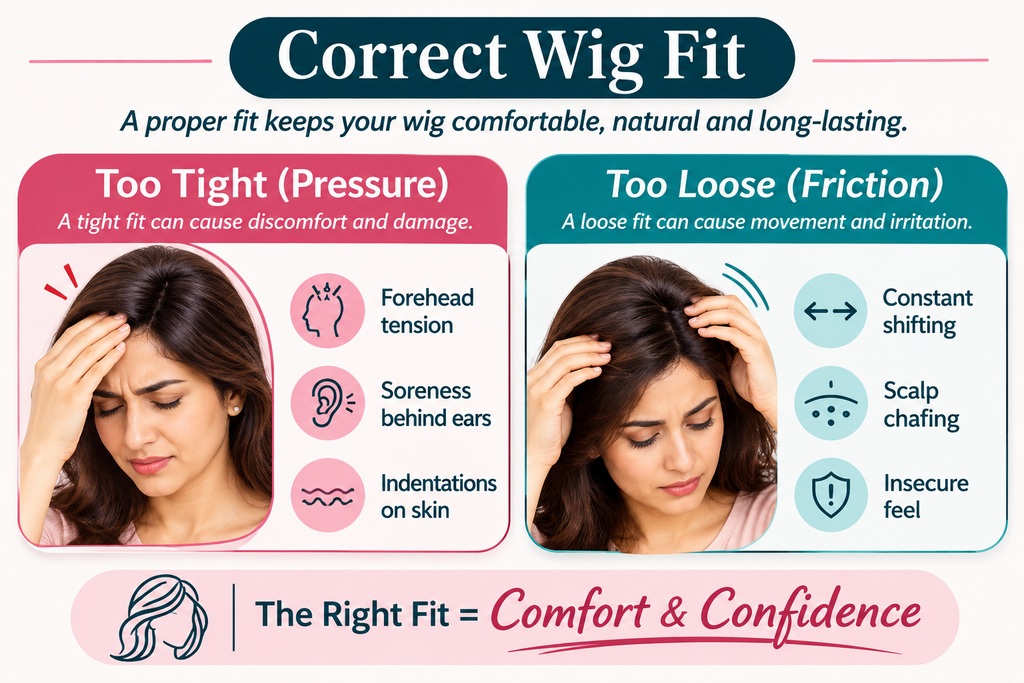
Tips for Achieving the Ideal Fit:
- Measure Accurately: Head circumference can shift slightly after total hair loss. Measure around your natural hairline, front-to-back, and ear-to-ear across the top of your head.
- Utilize Nape Adjusters: Use the velcro or hook-and-loop straps located at the nape of the neck to fine-tune the circumference. The wig should feel snug—similar to a soft knit hat—without squeezing.
- Choose Non-Damaging Security: If you require extra security for active days, pair your wig with a velvet wig grip band. The velvet friction keeps the wig anchored without requiring tight adjusters or skin adhesives.
6. Wash and Maintain Your Wig Regularly
Over time, natural oils, dead skin cells, environmental dust, and sweat accumulate within the interior cap mesh. This residue is a frequent cause of unexpected itching.
- Washing Frequency: Wash synthetic wigs every 6 to 8 wears, and human hair wigs every 7 to 10 wears (increase frequency during warm summer months or active periods).
- Target the Interior Cap: When washing, gently submerge the wig in cool water using a specialized, hypoallergenic wig shampoo. Ensure you thoroughly rinse the interior cap fabric where sweat accumulates.
- Never Wear a Damp Cap: Always place your wig on a collapsible wire wig stand to air-dry completely. Wearing even a slightly damp wig cap traps moisture against the scalp, creating an ideal environment for skin irritation.
7. Avoid Common Mistakes That Cause Discomfort
- Relying on Tight Straps for Security: Tightening nape straps to prevent slipping often creates severe pressure behind the ears. Use a velvet wig grip instead.
- Skipping the Protective Cap: Putting a wig directly onto bare, sensitive skin increases friction. Always use a soft bamboo or silk liner.
- Ignoring Early Signs of Irritation: If you feel a hot spot or scratchy seam, adjust your cap immediately or add a protective barrier rather than trying to power through the day.
Your All-Day Chemo Wig Comfort Checklist
Before heading out for the day, review this quick checklist to ensure maximum comfort:
- Scalp Prepared: Cleaned and lightly moisturized (fully absorbed).
- Protective Layer On: Soft, breathable bamboo viscose or cotton liner positioned comfortably.
- Secure Anchor: Velvet grip band adjusted without tight pressure points.
- Wig Adjusted: Nape straps set for a snug, gentle fit that sits comfortably behind the ears.
- Cap Clean & Dry: Interior mesh checked for freshness and complete dryness.
- Backup Plan Ready: Spare soft cap or scarf packed in your bag for comfortable wig breaks when needed.
Frequently Asked Questions About Chemo Wig Comfort
Why does my chemo wig make my scalp itch?
Itching is typically caused by heightened skin sensitivity during chemotherapy, scalp dryness, friction from interior machine seams, or trapped sweat and heat. Using a soft bamboo liner and maintaining a moisturized scalp significantly reduces these triggers.
What is the most comfortable wig cap for a sensitive scalp?
A 100% hand-tied monofilament wig is widely considered the most comfortable construction. It features smooth interior netting without coarse machine wefts, eliminating harsh seams against bare skin.
Can I wear my chemo wig all day?
Yes, you can safely wear your wig all day provided it fits correctly and you use a soft, moisture-wicking liner like bamboo viscose. However, it is always beneficial to take small breaks at home to let your scalp rest and breathe.
Experience Comfort & Confidence with World Wide Hair Hub
At World Wide Hair Hub, we understand that choosing a wig during cancer treatment is about much more than style—it is about feeling comfortable, confident, and like yourself every single day.
Our carefully curated selection of medical-grade wigs, ultra-soft hand-tied caps, and breathable bamboo accessories are designed to meet the highest standards of comfort. Explore our collection today at World Wide Hair Hub and experience hair solutions crafted with care, quality, and complete comfort in every strand.
Leave a Reply