
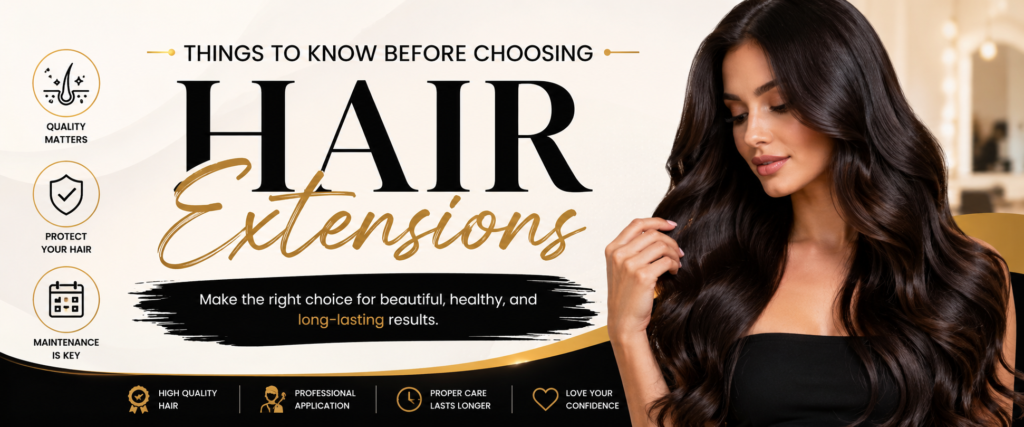
Hair extensions have become one of the most popular ways to instantly add length, volume, and style — no waiting months for natural growth required. Whether you want a fuller everyday look, dramatic length for a special occasion, or a subtle boost of thickness, the right extension method can make a significant difference.
But with so many options on the market, the choice can feel overwhelming. This guide breaks down everything you need to know — extension types, hair quality, maintenance, and common pitfalls — so you can invest with confidence.
Why People Choose Hair Extensions
Hair extensions aren’t just for celebrities anymore. Today, they’re a mainstream solution for anyone who wants to:
Add instant length or volume
Cover thinning areas or create the appearance of thickness
Experiment with new styles without committing to a cut or colour
Add highlights without chemically treating natural hair
Enhance confidence for everyday life or a big event
The key to getting great results is matching the right method to your hair type, lifestyle, and goals — which is exactly what this guide will help you do.
The 7 Main Types of Hair Extensions
1. Clip-In Hair Extensions – The Most Convenient Option
Clip-ins are the simplest and most flexible extension method available. They attach with small pressure clips and can be put in and taken out within minutes — no professional required.
Benefits:
Easy to apply and remove at home
No long-term commitment
No heat, glue, or chemicals involved
Minimal risk of damage when used correctly
Great for occasional wear or special events
Best for: Anyone who wants temporary volume and length without the upkeep of a permanent method.
If you’re new to extensions or want flexibility, clip-ins are the perfect starting point.
2. Micro Ring & Nano Ring Extensions – The Most Popular Choice
Micro ring and nano ring extensions are among the most widely requested semi-permanent methods. Small metal rings clamp extension strands to sections of your natural hair — no glue, no heat.
Benefits:
Highly natural look and movement
Reusable — the same hair can be reinstalled
No adhesive or harsh chemicals
Lasts approximately 3–4 months before a maintenance appointment
Can be adjusted as your hair grows
Best for: Anyone looking for a long-term, low-chemical solution that delivers both volume and length.
Their durability and natural finish make them one of the most recommended methods by professional stylists.
3. Feather Hair Extensions – The Latest Lightweight Technology
Feather extensions are one of the newest innovations in the industry and are quickly gaining popularity for good reason. They’re engineered to sit lighter on the scalp than traditional methods, reducing tension and pressure.
Benefits:
Exceptionally lightweight
Comfortable for all-day wear
Less scalp tension than micro rings or sew-ins
Beautiful, natural-looking finish
Ideal for clients who find heavier methods uncomfortable
Best for: People with sensitive scalps or those who’ve experienced discomfort with traditional extension systems.
Feather extensions are a strong choice for anyone who prioritises comfort without compromising on results.
4. Tape-In Hair Extensions – Natural and Discreet
Tape-ins use medical-grade adhesive strips to sandwich thin sections of your natural hair between two wefts, lying flat against the scalp for a seamless, low-profile finish.
Benefits:
Lightweight and discreet
Quick installation (typically under two hours)
Blends naturally with most hair types
Comfortable for daily wear
Things to Consider:
Professional installation and removal are essential
Requires a touch-up every 6–8 weeks
Avoid oil-based products near the roots, as they can weaken the adhesive
Best for: Anyone who wants a natural-looking, low-bulk result — a solid middle ground between temporary and permanent options.
5. Keratin Bond Hair Extensions – The Premium Choice
Keratin bond extensions (also called fusion extensions) use a keratin-based adhesive heat-fused to individual strands of your natural hair. The result is an incredibly seamless, strand-by-strand blend.
Benefits:
Exceptionally natural look and feel
Long-lasting — often 4–6 months with proper care
Versatile styling, including heat tools and updos
Strong and secure attachment
Things to Consider:
Application is time-intensive (3–6 hours is typical)
Removal must always be carried out by a professional
Improper aftercare or excessive heat can lead to damage
Best for: Clients who want long-term, premium results and are committed to professional maintenance.
6. Sew-In (Weave) Hair Extensions
Sew-in extensions involve braiding your natural hair into cornrows, then sewing extension wefts directly onto those braids. It’s one of the most time-tested methods in the industry.
Benefits:
Long-lasting and highly durable
Creates impressive volume and length
Ideal for thick, coarse, or high-density hair types
Things to Consider:
Not recommended for fine or thin hair
Can feel heavy if installed with too much hair or incorrectly
Requires regular professional upkeep
Best for: People with naturally thick hair who want bold, full results that hold up for months with minimal daily effort.
7. Glue-In Hair Extensions – An Older Method
Glue-in extensions were once a common choice but have largely been replaced by safer, more advanced methods. A hot adhesive is used to bond extension strands to natural hair.
Things to Consider:
Higher risk of damage to natural hair
Removal process can be difficult
Requires professional care throughout
While glue-ins can still deliver results, most stylists now recommend micro ring, tape-in, or feather extensions as safer, more comfortable alternatives.
Human Hair vs. Synthetic Hair Extensions
Before choosing an extension type, it’s worth understanding the difference in materials.
Human Hair Synthetic Hair Look & Feel Natural and realistic Can appear less natural Heat Styling Yes — curling irons, straighteners Limited or not possible Colour & Treatment Can be dyed and chemically treated Generally not recommended Lifespan 1–2+ years with proper care3–6 months on average Cost Higher upfront investment More budget-friendly
For the most natural, versatile, and long-lasting results, premium human hair extensions are the recommended choice for most clients.
Understanding Hair Extension Weight and Volume
One of the most common questions is: “How much hair do I actually need?”
Extensions are typically sold by weight rather than strand count, so here’s a simple guide:
100 grams delivers noticeable volume and length enhancement for most people
Approximately 100–120 extension pieces typically equals around 100 grams
Thicker, fuller hairstyles may require more than 100 grams
The exact amount depends on your natural hair’s thickness and texture, your desired volume and length, and how your hair is currently layered. A professional consultation is the most reliable way to determine the right amount for your specific goals.
Common Mistakes to Avoid
Even well-researched clients make these errors. Here’s what to watch out for before you commit:
Choosing extensions that are too heavy for your natural hair density — this can cause breakage over time
Overlooking maintenance requirements — every method has ongoing care needs that affect cost and time
Prioritising price over quality — low-quality hair often looks unnatural and has a much shorter lifespan
Getting the colour match wrong — always test in natural lighting; a slight mismatch is very visible
Using an inexperienced technician for methods that require professional application
Ignoring scalp sensitivity, especially with adhesive or heat-based methods
When in doubt, book a consultation before committing. A good stylist will assess your hair type, lifestyle, and goals — and steer you away from costly mistakes.
Which Hair Extension Is Right for You?
Choose Clip-In Extensions if:
You want flexible, temporary volume and length, only wear extensions occasionally, or prefer a DIY solution with no long-term commitment.
Choose Micro Ring or Nano Ring Extensions if:
You want a semi-permanent result with natural movement, prefer reusable extensions, and want to avoid adhesives or heat during application.
Choose Feather Extensions if:
Comfort is your top priority, you have a sensitive scalp, or you’ve found heavier extension methods uncomfortable in the past.
Choose Tape-In Extensions if:
You want a discreet, lightweight blend that looks natural and doesn’t add bulk — with a faster installation time than most permanent methods.
Choose Keratin Bond Extensions if:
You’re looking for a premium, long-lasting result and are comfortable with professional maintenance every few months.
Choose Sew-In Extensions if:
You have thick or coarse hair and want maximum volume, durability, and a style that lasts for months with minimal daily effort.
Final Thoughts
Hair extensions can genuinely transform your look — adding length, volume, and confidence in a single appointment. But choosing the right method matters as much as choosing the right stylist. Getting it wrong can mean discomfort, damage, or results that simply don’t live up to expectations.
From the everyday convenience of clip-ins to the durability of micro ring systems and the comfort of modern feather extensions, each method has its strengths. Understanding your hair type, lifestyle, and maintenance preferences will help you make the right call.
At Worldwide Hair Hub, our experts work with each client individually to find the most suitable extension method for their hair, their lifestyle, and their goals. Whether you’re after subtle volume or a full transformation, professional guidance makes all the difference.
Book a consultation with Worldwide Hair Hub today and take the first step towards the hair you’ve always wanted.
Leave a Reply